
How to Replace Boat Engine the Right Way
A boat engine replacement usually starts the same way - the old motor is unreliable, repairs keep stacking up, or the horsepower no longer fits the job. If you are researching how to replace boat engine setups, the real question is not just how to remove one and bolt on another. It is how to choose the right replacement, avoid rigging mistakes, and end up with a setup that performs the way you expect on the water.
For most buyers, this is part mechanical project and part purchasing decision. Getting both parts right matters. A replacement engine that is too heavy, underpowered, overpowered, or incompatible with your current controls can turn a simple swap into an expensive problem.
How to replace boat engine without costly mistakes
Before you unbolt anything, confirm what you have now. Check the boat's capacity plate, current engine brand and horsepower, shaft length, steering type, control setup, fuel system, and transom condition. A lot of replacement issues come from skipping this step and assuming any similar-looking outboard will fit.
Transom height is one of the first things to verify. Outboards are built around standard shaft lengths, and matching shaft length to transom height is critical for proper performance. If the shaft is wrong, you can end up with ventilation, poor handling, and unnecessary strain on the engine.
Weight matters too. Many newer engines have different weight profiles than older models with the same horsepower. If your previous motor was lighter, a newer replacement may change how the boat sits in the water, especially on smaller fishing boats, skiffs, and older hulls. That does not always make the swap a bad idea, but it does mean you need to check the numbers before buying.
Start with the right replacement engine
The smartest way to approach a repower is to work backward from your boat and your use case. If you run a bay boat for fishing, your priorities may be fuel economy, quiet operation, and reliable starts. If you run a work boat or small fleet setup, durability and easy parts access may matter more than top speed.
Horsepower should match the hull rating and the way you use the boat. Going lower than your previous horsepower may save money upfront, but it can hurt hole shot, load-carrying ability, and efficiency if the engine has to work harder all the time. Going higher can improve performance, but only if the boat is rated for it and the rest of the setup can support it.
Brand choice often comes down to parts availability, dealer familiarity, rigging compatibility, and budget. Buyers typically compare Yamaha, Mercury, Suzuki, Tohatsu, and Evinrude based on reliability, weight, controls, and price. If you already have compatible gauges, controls, or rigging components, staying with the same brand can reduce replacement cost. If not, switching brands may still make sense if the total package is better.
This is where a product-first shopping experience helps. A site like GN Engines Center gives buyers a way to compare engine options by horsepower, brand, and price without waiting on local dealer inventory.
Remove the old engine carefully
Once you have confirmed the replacement plan, disconnect the battery first. Then shut off fuel, disconnect the fuel line, remove control cables or electronic control connections, disconnect wiring harnesses, and detach steering components. Label everything as you go. Even experienced mechanics do this because reinstallation gets faster when every connection is clearly identified.
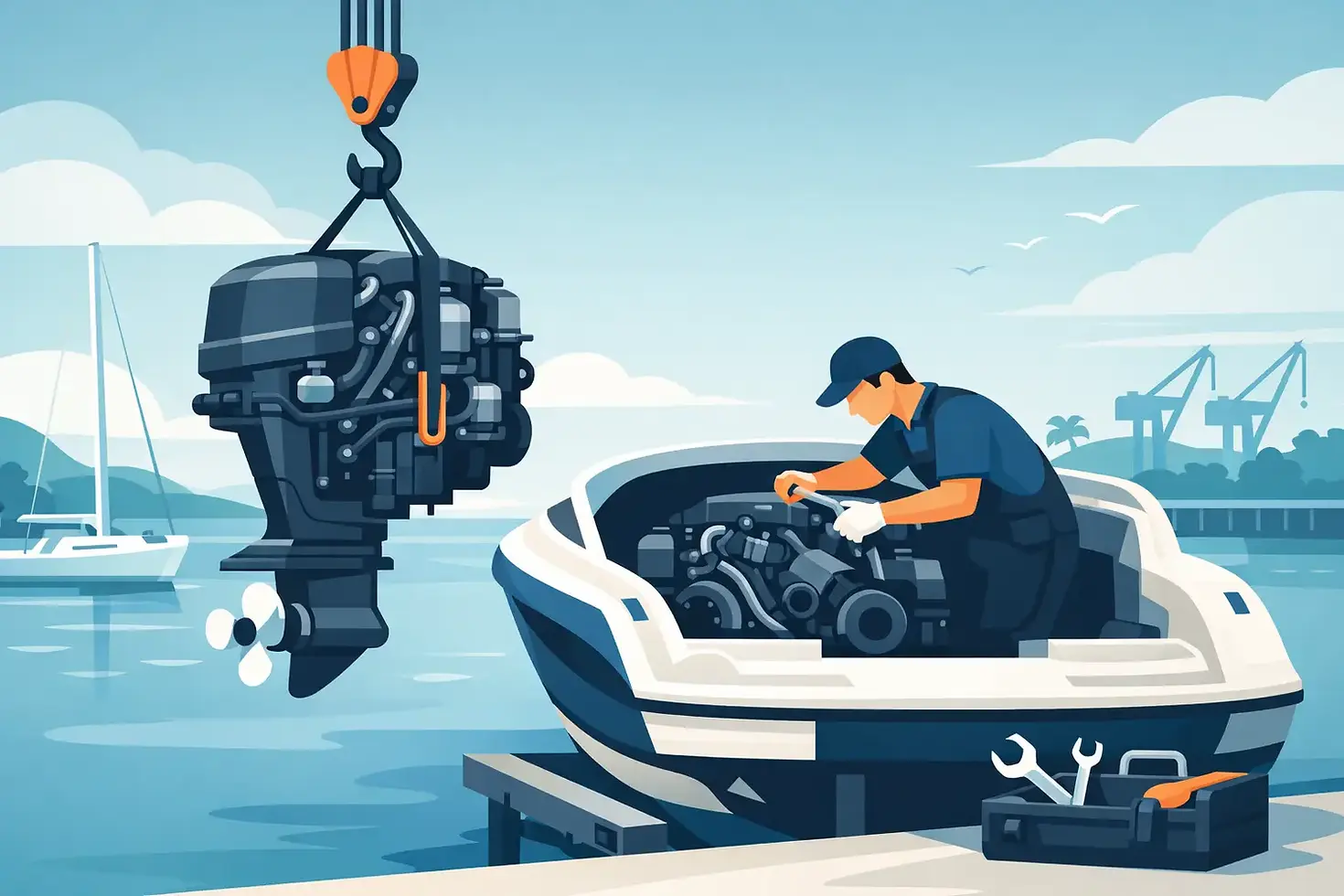
Support the engine with a proper hoist or lifting eye before removing the mounting bolts. Never rely on the bolts alone while the engine is under load. Outboards are heavy, awkward, and easy to damage during removal if they swing unexpectedly.
After the old engine is off, inspect the transom closely. This is not the place to rush. Soft wood, cracked fiberglass, wet core material, or elongated bolt holes should be fixed before the new engine goes on. A fresh engine mounted to a weak transom is a bad investment.
Installing the new engine
Mounting height is one of the biggest performance factors in any repower. Too low and the boat may drag, burn more fuel, and feel sluggish. Too high and the prop may ventilate. The correct bolt hole position depends on hull design, engine type, and prop setup, so there is no one-size-fits-all answer.
Use the correct bolt pattern and marine-grade hardware. Seal all mounting holes properly to keep water out of the transom. Then connect steering, wiring, fuel, battery cables, and controls based on the engine manufacturer's specifications. If the replacement motor uses different digital gauges, control boxes, or harnesses, plan for those parts before installation day. A lot of delays happen because the engine arrives ready, but the rigging package does not.
Throttle and shift adjustment should be checked before first startup. So should fuel delivery, battery charge, engine oil where applicable, and cooling water supply. If you are replacing an older two-stroke with a newer four-stroke or direct-injection unit, expect some rigging differences.
It depends on what kind of swap you are doing
Not every replacement is equally simple. Replacing an outboard with the same brand, same horsepower class, and similar rigging can be straightforward. Moving to a different brand or significantly different horsepower often adds cost beyond the engine itself.
You may need new controls, new gauges, a different propeller, updated fuel filtration, steering upgrades, or a battery setup that meets the new engine's electrical demands. On some boats, the replacement price looks attractive until all those secondary parts are added in. That does not mean the repower is not worth doing. It just means the full cost needs to be calculated early.
The same applies to performance expectations. A newer engine can deliver better fuel economy, cleaner operation, and easier starting, but top-end speed is not guaranteed unless the boat is propped and mounted correctly. Buyers sometimes expect instant gains from horsepower alone and overlook setup.
Should you do it yourself or hire a marine mechanic?
If you have lifting equipment, installation experience, and a clear understanding of rigging systems, a do-it-yourself replacement can save labor cost. For straightforward same-brand swaps, that may be realistic.
If the project involves digital controls, steering changes, electrical rework, transom repair, or uncertain compatibility, professional installation is often the safer call. The labor bill may be easier to accept than chasing water pressure issues, control problems, or transom leaks after the fact.
For many boat owners, the best middle ground is handling the buying process carefully and letting a qualified installer complete the rigging and setup. That keeps the project moving while reducing risk.
How to replace boat engine and buy smarter
A good engine replacement is not only about brand reputation. It is about matching the motor to the boat, the workload, and the buyer's budget. Start with the basics: horsepower rating, shaft length, engine weight, steering compatibility, control type, and total rigging cost. Then compare available inventory, pricing, and support.
Availability matters more than many buyers expect. A lower advertised price does not help much if the engine is backordered, missing key rigging components, or hard to support after the sale. Buyers who shop online usually want clear product details, straightforward pricing, secure checkout, and responsive support if they have pre-purchase questions.
That is especially true for replacement buyers who are trying to get back on the water quickly. Whether the boat is used for weekend fishing, transport, resale, or seasonal work, downtime has a cost. Buying from a source that offers recognized brands, broad horsepower options, and customer support can remove a lot of friction from the process.
Before you place the order, confirm the full package. Ask what is included, what is not, and what existing components can be reused. That one step can save time, labor, and return headaches.
Replacing a boat engine is a serious purchase, but it does not need to be a guessing game. When the motor fits the boat, the rigging is planned correctly, and the numbers make sense, the result is simple - better reliability, better performance, and fewer surprises when it is time to turn the key.


Comments