
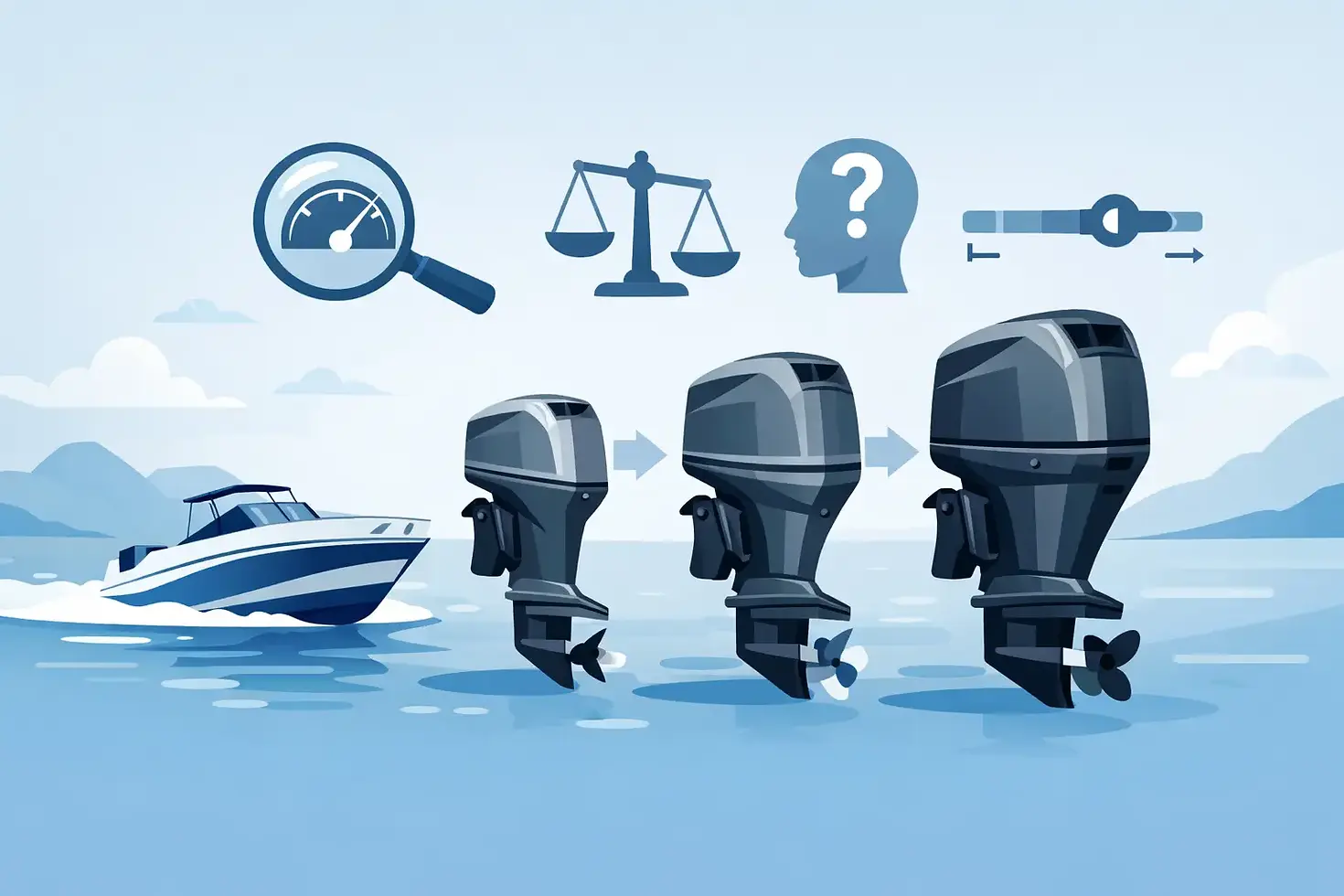
How to Choose Outboard Motor Horsepower
Buying too little horsepower usually leads to regret. Buying too much can create handling problems, higher fuel costs, and in some cases a setup that your boat is not even rated to carry. If you are figuring out how to choose outboard motor horsepower, the right answer starts with your boat's capacity plate, then moves to how you actually use the boat.
For most buyers, this is not really about chasing the biggest engine available. It is about matching horsepower to hull design, passenger load, gear weight, performance expectations, and budget. A fishing skiff, a pontoon, and a center console can all be similar lengths and still need very different power.
How to choose outboard motor horsepower without guessing
The fastest way to narrow your options is to treat horsepower as a boat-matching decision, not just an engine-shopping decision. Start with the maximum horsepower rating listed by the boat manufacturer. That number matters because it reflects the hull's design, transom strength, flotation, and handling characteristics.
If your boat is rated for a maximum of 150 HP, that does not mean 150 is automatically the best choice. It means you should not exceed it. The real decision is where you want to land within the approved range. Many buyers end up choosing near the upper half of that range because it gives better load carrying, easier planing, and less strain when the boat is full of people or gear.
If you regularly run with two people and light equipment, a mid-range option may be enough. If you carry a full crew, fish offshore, tow watersports, or operate in rougher water, the higher end of the range often makes more sense.
Start with the boat's max HP rating
This is the first filter, not a suggestion you can ignore. Exceeding the rated horsepower can affect safety, insurance coverage, resale value, and legal compliance. It can also put extra stress on the transom and change the way the boat handles at speed.
If the plate shows both passenger and weight limits, pay attention to those too. Horsepower does not work in isolation. A boat that is technically rated for a certain engine may still perform poorly if it is constantly overloaded with coolers, batteries, tackle, fuel, and passengers.
Boat type matters as much as boat length
Length gives you a starting point, but hull type tells you how the boat moves through the water. A lightweight aluminum fishing boat may perform well with modest horsepower. A heavier fiberglass bay boat of similar length may need substantially more power to plane cleanly and stay efficient under load.
Pontoon boats are a common example. Some are used for slow cruising and need only moderate horsepower. Others are built for higher speeds, watersports, or carrying large groups and need much more. The same goes for center consoles, jon boats, inflatables, and workboats. The intended use changes the horsepower target.
Match horsepower to real-world use
A lot of buyers make the mistake of shopping based on occasional use instead of normal use. If you only tow a tube once a year but mostly cruise with family on a small lake, that should not define your engine choice. On the other hand, if you fish every weekend with a livewell full, extra fuel onboard, and multiple passengers, you need to size for that reality.
Think about how quickly you want the boat to get on plane, what cruise speed feels acceptable, and whether you care more about low purchase cost or stronger all-around performance. Lower horsepower can save money upfront, but if the engine is working hard all the time, that savings may not feel so good over the long run.
Light use vs heavy loads
A lightly loaded boat can get by with less horsepower, especially if top speed is not a priority. That setup can be practical for calm inland waters, short trips, and fuel-conscious owners.
Heavy loads change everything. More people, more fuel, more gear, and rougher water all increase the power required to maintain performance. If your boat struggles to plane or feels sluggish with a normal load, the engine may be undersized for your use case even if it technically falls within the manufacturer's rating.
Speed expectations should be realistic
Some buyers want efficient cruising. Others want quick hole shot, stronger acceleration, or the ability to run fast when weather changes. There is no universal best horsepower because performance goals vary.
What matters is honesty about your expectations. If you want strong midrange power and less stress when conditions are not ideal, choosing closer to the upper end of the rating is often the smarter call. If your priority is simple transportation at moderate speed, you may not need max-rated power.
Weight, shaft length, and engine setup all affect the answer
Horsepower is only part of the buying decision. Outboard weight matters, especially on smaller boats. Two engines with similar horsepower may have different weights depending on brand, engine type, and rigging configuration. More transom weight can affect draft, balance, and hole shot.
Shaft length also has to match the boat's transom. A mismatch can hurt performance, increase spray, and create handling issues. Propeller selection, mounting height, and gear ratio also affect how the boat performs once the engine is installed. That is why two boats with the same horsepower on paper may feel very different on the water.
This is where many buyers benefit from looking at the complete setup rather than shopping horsepower alone. If you are comparing Yamaha, Mercury, Tohatsu, Suzuki, or Evinrude models, look at total engine weight, compatible shaft length, and the type of boating you do most.
The trade-off between fuel economy and performance
It sounds logical to assume smaller horsepower always means better fuel economy. In real use, that is not always true. An undersized outboard often has to run harder to move the boat, especially when loaded. That can mean higher throttle settings for longer periods, which reduces efficiency and adds wear.
A properly matched engine often cruises more comfortably at lower strain. That can improve fuel use in the speed range you actually run. The cheapest engine to buy is not always the cheapest engine to own.
The same trade-off applies to durability and comfort. If the boat planes easier, handles load better, and does not feel overworked, the ownership experience is usually better. For buyers who spend serious time on the water, that matters.
When to go lower, middle, or near max horsepower
There is no one-size-fits-all rule, but there are reliable patterns. Lower-range horsepower tends to fit buyers with light loads, low-speed use, and tighter budgets. Mid-range horsepower often works well for general family boating and mixed use. Near-max horsepower usually suits buyers who carry weight, want better acceleration, operate in more demanding conditions, or simply do not want to outgrow the setup in one season.
If you are replacing an outboard and liked the way your boat performed before, staying close to the existing horsepower is a practical benchmark. If you were unhappy with planing, load capacity, or throttle response, that is a sign to reassess instead of replacing like for like.
How to avoid common buying mistakes
The biggest mistake is treating horsepower as the only number that matters. Buyers also get into trouble by ignoring the capacity plate, overlooking engine weight, or choosing based on price alone. A discount on the wrong horsepower is still the wrong buy.
Another common issue is buying for ego instead of use. Bigger is not automatically better if it exceeds the way you run the boat, increases cost, or creates balance issues. At the same time, buying too small to save money can lead to disappointment from day one.
A smarter approach is to compare approved horsepower options side by side, then look at weight, intended use, brand preference, and budget. That gives you a setup you can actually live with.
If you are shopping online at https://www.gnenginescenter.com/, this is where a broad horsepower range becomes useful. It lets you compare recognized brands and available models without being pushed into a one-size-fits-all recommendation.
A practical way to make the final choice
If you want a simple decision framework, use this order. Confirm the boat's max HP rating. Define your normal passenger and gear load. Be honest about whether you want basic cruising or stronger performance. Then compare engine weight and fitment, not just horsepower.
That process usually points buyers to the right range quickly. Once you know the range, choosing among brands becomes easier because you are comparing realistic options instead of guessing.
The best horsepower is the one that fits your boat, your load, and the way you use the water every week - not the one that only looks good on a spec sheet. Buy for your actual boating life, and the engine will make sense long after the price tag is forgotten.


Comments